
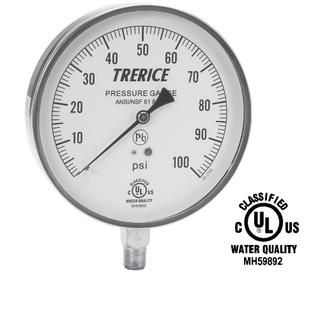
Every system that handles fluids or gases depends on accurate readings. A stainless steel pressure gauge helps you measure and control these forces. But many operators do not fully understand the numbers on the dial. That can lead to confusion or even mistakes. Knowing how to read these measurements correctly ensures your equipment runs safely and efficiently.
When you look at the gauge, you will notice two things. First, the needle points to a number that tells you the current pressure. Second, the numbers are set in units like PSI, bar, or kPa. Each unit tells the same story but in different languages. Understanding which unit your system uses is the first step toward accurate monitoring.
Reading the Scale
A pressure gauge often comes with a dual scale. This means it shows pressure in two different units at the same time. For example, you might see PSI on the outer ring and bar on the inner ring. Reading the correct scale is critical. Mistaking one for the other could result in setting your system to the wrong levels.
Another point to remember is the maximum number on the gauge. This is known as the full scale. It shows the upper limit the gauge can measure. Running your system close to this limit puts stress on the gauge and may reduce its lifespan. Always keep your operations well within the safe zone to avoid costly repairs.
Why Stainless Steel is the Preferred Choice
Many industries prefer stainless steel for their pressure gauges. The reason is simple. Stainless steel resists corrosion and holds up under tough conditions. If your system operates in humid, wet, or chemically active environments, stainless steel lasts much longer than other materials.
The construction also offers accuracy. Stainless steel parts do not warp or rust easily. This means the readings remain stable over time. For industries like waterworks, HVAC, or commercial plumbing, this reliability makes all the difference. You can trust the numbers without second guessing.
Common Mistakes to Avoid
One common mistake is ignoring the calibration of the gauge. Even the best pressure gauge needs regular checks. If it falls out of calibration, your readings may drift. Another mistake is installing the gauge in the wrong position. A gauge should be upright to give the most precise measurement.
Operators sometimes overlook the effect of temperature. High heat can alter readings or cause the gauge to wear out faster. Using a gauge designed for high temperature applications solves this issue. Knowing these simple facts helps extend the life of your instruments and keeps your system safe.
How Lehigh Valley Valve Supports You
Choosing the right pressure gauge is only part of the process. At Lehigh Valley Valve, we guide you through every step. From selecting the right model to ensuring proper installation, our team is here to help. We also carry a wide range of valves, fittings, and repair parts for every project.
Our service does not stop with the sale. We provide ongoing support so you can operate with confidence. Most items ship within one to two days. Whether you order online or work with us directly, you will experience quick service and expert advice. That is what sets us apart from other distributors.
The Bottom Line
Reading the numbers on your stainless steel pressure gauge does not need to feel confusing. With a clear understanding of units, scales, and safe operating ranges, you can keep your systems running smoothly. Stainless steel offers durability and accuracy, making it the smart choice for industrial and commercial use.
Lehigh Valley Valve is here to ensure you get the right gauge and the right support. We provide products, advice, and nationwide shipping that you can rely on. Call us today to quote your project or place your order online. Experience the difference of working with a full service provider that puts your needs first.

 Arabic
 French
 Spanish
 Portuguese
 Deutsch
 Turkish
 Dutch
Dutch
 Italiano
 Russian
 Romaian
 Portuguese (Brazil)
 Greek
Greek