
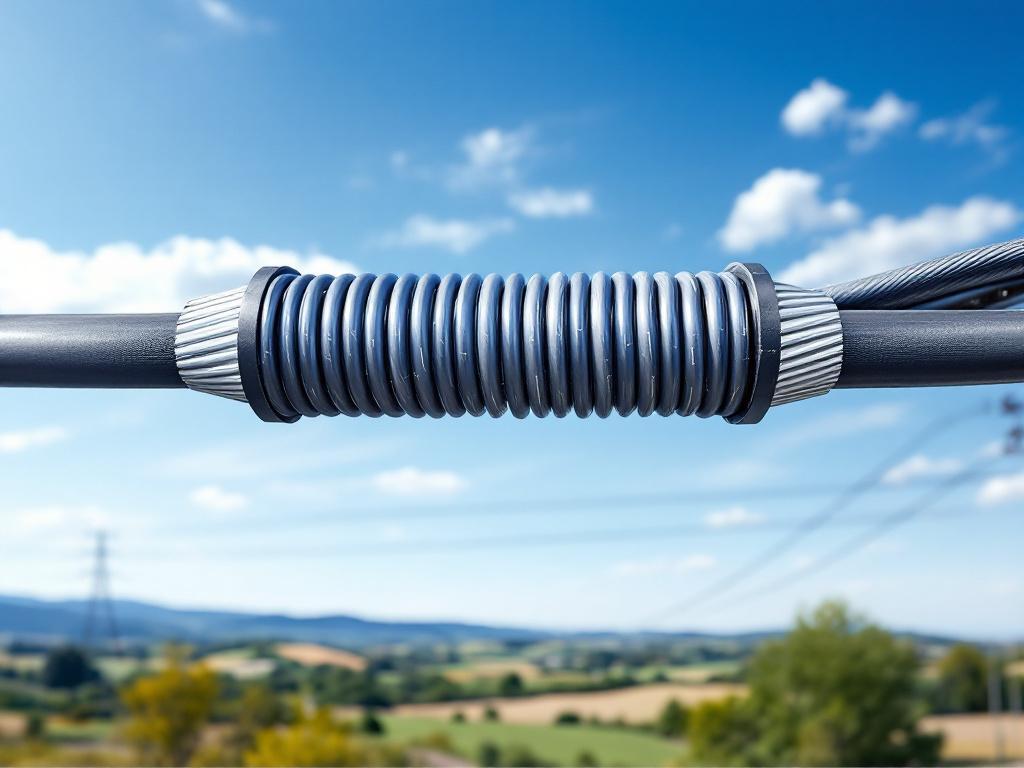
Electricity is essentially the lifeblood of modern civilization, powering homes, industries, healthcare systems, communication networks, and transport infrastructures. An extended web of power distribution systems can facilitate seamless distribution of electricity right from generation plants to end-users. Right at the heart of such a system is something that usually gets overlooked, yet is such an important part: high-voltage cables. In essence, these cables form the backbone of modern power distribution, enabling the efficient, safe, and dependable transmission of electric power over huge distances.
This blog, in general, covers high-voltage cables as intrinsic parts of modern power distribution systems, their types, and applications, plus some new technologies shaping up the future of energy transmission.
Understanding High-Voltage Cables
High-voltage cables are those that are specially manufactured conductors for carrying electrical power at voltages over 1,000 volts in alternating current and over 1,500 volts in direct current by High Voltage Cable Manufacturers. They are designed so that huge amounts of electricity can be handled with minimum energy losses and also in such a manner that the safety considerations are taken care of. The demand for high-voltage cables is basically a necessity because if electricity is transmitted over long distances at lower voltages, huge power losses occur due to resistance and the generation of heat.
Structure of High-Voltage Cables
A typical high-voltage cable will contain several layers:
- Conductor: That is the central metallic core carrying the electric current. By preference, considering its high conductivity, the conductor is made of copper material; however, lighter and more economical alternatives are the aluminum conductors.
- Insulation: The insulation layer covering the conductor should be of high quality and made from either XLPE or EPR. It will prevent current leakage and guarantee safety by keeping the electrical field confined.
- Semiconducting Layers: These layers are between the conductor and insulation and between the insulation and outer sheath. They help to maintain uniform electric fields and reduce electrical stress and breakdowns.
- Sheath or armour: The outermost cover of PVC or polyethylene-a sheath or armor-protects the cable against mechanical damage, moisture, and environmental hazards. An additional metallic armour is sometimes applied against mechanical impacts or rodent attacks.
Importance of High-Voltage Cables in Power Distribution
High-voltage cables have been regarded as critical in modern power systems due to a number of reasons:
- Efficient Long-Distance Power Transmission: As a rule, the location of electricity generation facilities is far away from the centres of consumption. This is because most power plants have to be built near their source of water for hydroelectricity or in remote areas where solar and wind farms can get maximum sunlight and wind. The energy produced over such distances is transported by high-voltage cables to keep the losses low. For the same amount of power, if the voltage increases, the current that would flow through the conductor decreases, thereby reducing resistive losses and increasing efficiency.
- Ensuring Grid Reliability: A modern power grid must be reliable and resilient. High-voltage cables are useful in maintaining continuity of supply in conditions of high load or in emergencies. For instance, a high-voltage underground cable in highly populated urban areas would avoid outages due to possible weather incidents, including storms or fallen trees that might affect overhead transmission lines.
- Facilitate Urban and Industrial Expansion: Rapidly growing urbanization and growth in all industries increase the demand for electricity and, therefore, require an infrastructure of power in these cities. High-voltage underground cables work well in an urban environment, especially when space is limited and overhead lines cannot be constructed. They ensure that electricity is distributed safely and efficiently without compromising aesthetic or urban planning regulations.
- Integration of Renewable Energy Sources: Also, with the world's shift towards wind, solar, and hydropower, there is an increasing requirement felt to integrate distributed generation into the grid. Similarly, high-voltage cables help in transmitting the generated power from remote renewable energy plants to centralized grids and then to urban centres that support the transition to the sustainable energy ecosystem.
- Improved Safety, Less Environmental Damage: Besides, high-voltage cables, particularly modern underground cables, bring several environmental and safety benefits. Where their overhead lines are especially vulnerable to faulty conditions from storms or fallen branches, they reduce the possibility of fire or accident hazards. This underground installation reduces electromagnetic radiation exposure and maintains natural landscapes-important features in urban and ecologically sensitive areas.
Types of High-Voltage Cables
According to the level of voltage they can bear and the nature of insulation involved, high-voltage cables are classified under a number of classes. The major categories are as follows:
- High-Voltage Alternating Current (HVAC) Cables: These cables are designed for transmitting alternating current at voltage levels of 1 kV up to 765 kV. HVAC systems are widely used because the voltage is easily transformed with the use of transformers. They can be used both underground and overhead.
- High-Voltage Direct Current Cables: HVDC cables are applied for transmitting direct current at high voltages, usually above 100 kV. They are very effective in long-distance transmission on account of the lower energy losses in comparison with HVAC cables. HVDC systems are finding increasing use in connecting offshore wind farms and interconnecting regional grids.
- Submarine High-Voltage Cables: Such submarine cables are designed for underwater power transmission by connecting the islands, offshore energy projects, and seas and rivers. These cables contain additional protective layers against high water pressure, corrosion, and mechanical stresses.
- Gas-Insulated High-Voltage Cables: Some high-voltage cables are gas-insulated, typically with sulphur hexafluoride (SF6), to improve their dielectric performance. In general, such cables are deployed in those applications where conventional insulation would be inadequate, either because the voltages are too high or because space is limited.
Conclusion
High-voltage cables stand as the unsung heroes of modern power distribution systems. They optimize long-distance transmission, enable integration with renewable energy sources, improve safety, and facilitate urban and industrial growth.
By leveraging advanced material and insulation technologies, coupled with smart monitoring systems, high-voltage cables will continue to adapt to 21st-century energy imperatives. In the march towards a more sustainable and electrified world, high-voltage cables will be there, playing their indispensable role as the lifeline that connects power generation with consumption and powering modern society safely and reliably.
Also Read: Everything You Need to Know About Different Cable Types

 English
 French
 Spanish
 Portuguese
 Deutsch
 Turkish
 Dutch
Dutch
 Italiano
 Russian
 Romaian
 Portuguese (Brazil)
 Greek
Greek